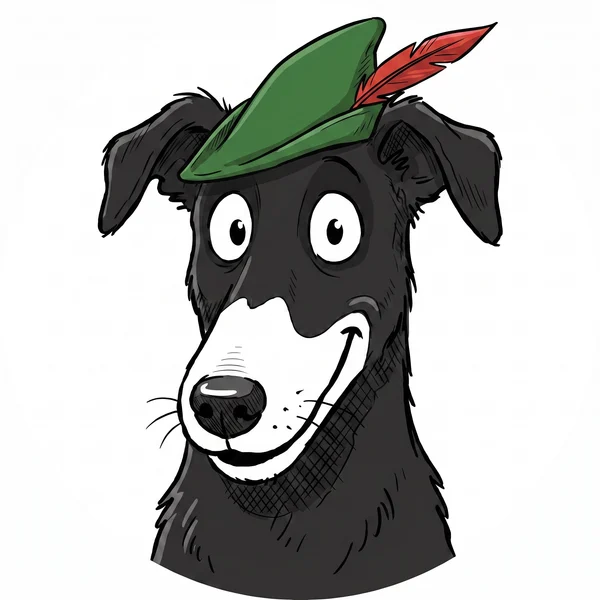
The First Dog Meme on the Internet
On the fifth of July, 1993, the weekly known as The New Yorker ran a small drawing by the cartoonist Peter Steiner. In it a dog seated at a computer confides to a friend that, upon the Internet, nobody knows he is a dog. The picture is plain enough: one dog at the keyboard, a second waiting upon the floor, and between them the plain truth that a machine and a wire had, for the first time in history, made every man, woman and beast unrecognisable to every other.
Steiner, it is reported, thought little of the sketch and was paid the ordinary rate. He could not have known he had drawn the founding scripture of online anonymity — a doctrine soon repeated in chat rooms, forums and dial-up basements the world over. No profiles, no photographs, no verification of any kind: a reader was whoever he claimed to be, and the dog had claimed nothing. Historians would come to call it the single most iconic cartoon ever made about the Internet, printed years before social media, the smartphone, or the whole apparatus of modern online life existed.
Its fame only swelled. It became the most reproduced cartoon in the magazine's history; Mr. Gates himself licensed it for his 1995 volume The Road Ahead; it was pressed into books, stage productions, courtrooms and lecture halls without number. By its author's account the reprint royalties ran to some two hundred thousand dollars and more — a handsome sum for a doodle about staying unknown.
In the year 2023 the original leaf came to auction. The house had marked it at forty to sixty thousand dollars; the bidding paid it no mind, and the hammer fell at $175,000 — the highest sum ever paid for a single-panel cartoon. Still the dog kept his counsel.
And the idea has not aged a day. Nobody truly knows who sits behind the screen — the very principle upon which Bitcoin, Ethereum, the memecoins, the anonymous founders and the whole pseudonymous republic of Web3 are built. Satoshi Nakamoto, wallet addresses, Discord handles: reputation is earned, not inherited; what one makes matters more than who one is. The cartoon predicted the age of crypto three decades before its arrival.
Thirty-three years on, the dog has said nothing further. He did not have to. It is more than a meme; it is one of the Internet's original legends — and now it bears a coin.
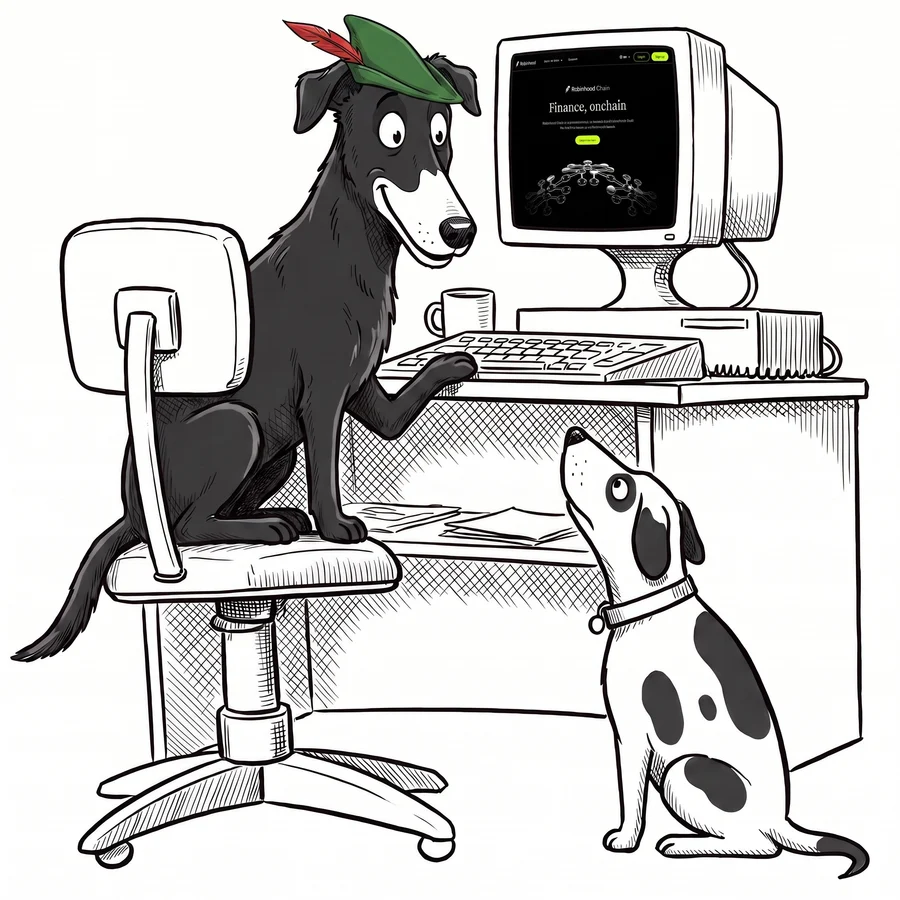
Sensation!
Nobody Knows You’re a Dog
A War Has Been Declared Upon the Cash Cat, Who Will Win?
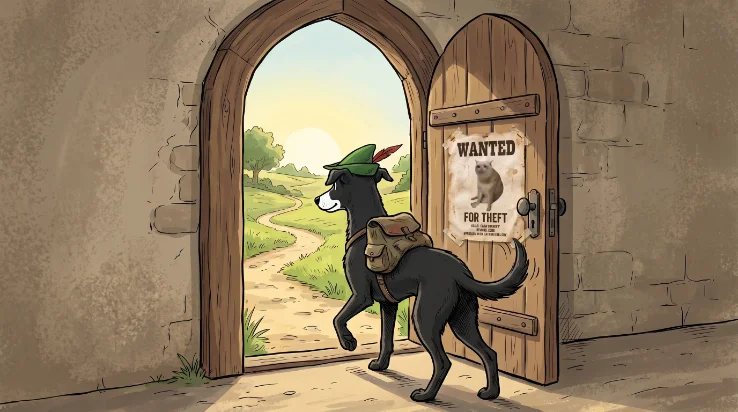
He had, by every account, retired. Thirty-three years at the same terminal, owing nothing to anyone, saying nothing at all. Then the cat grew fat — and the old dog reached for his hat.
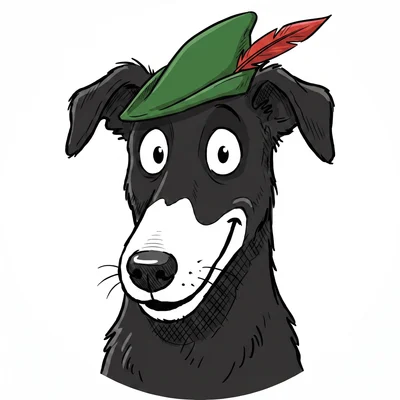
He proposes an arrangement most disagreeable to cash cats everywhere: that what has been taken from the many be returned to the many. He calls this arrangement, plainly, the pack.
“Take it off the cat,” he is reported to have typed, with a single paw. “Give it back to the pack.” He has said nothing further. He did not have to.
Dog Runs for Mayor
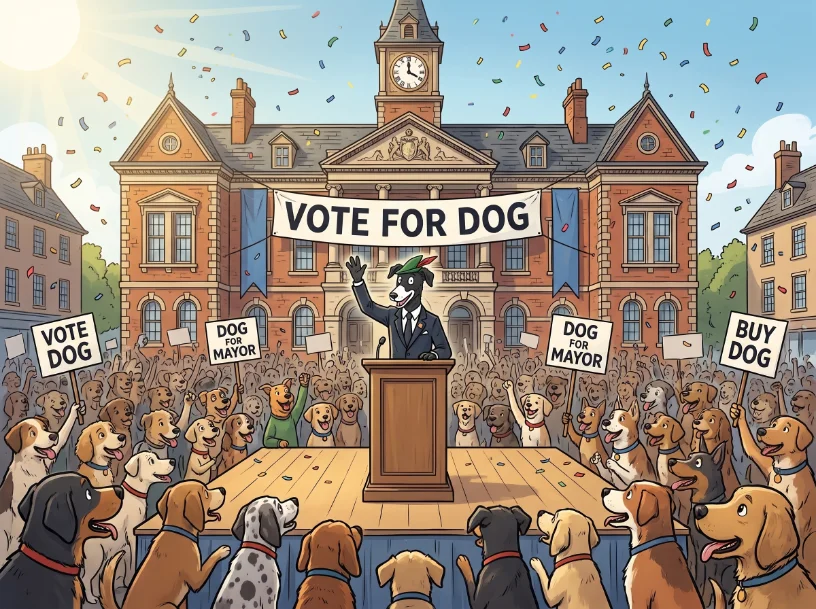
The district of Robinhood has been ruled long enough by the cash cat, and the citizens have decided they have licked their last empty bowl. This week a dog — the same dog who has said nothing since 1993 — announced he would stand for mayor, and the pack has answered in a single voice. Bones were laid down as ballots. The queue at the town gate has not thinned since.
The incumbent, who counts the common purse as his own and calls it “management,” has not appeared in public. His surplus, once boasted of, is now the subject of an open count. Every hour, more citizens cross the square to the challenger's side; the town crier reports the switch as “an uprising, conducted politely, with treats.”
The votes are being tallied as this edition goes to press. The cat leads in coin; the dog leads in noses, and there are, it turns out, a great many more noses than coins. The election falls this very week, and observers agree the pedestal will not hold a fat cat much longer.
He offered the crowd no manifesto — only a promise, and a wag.
A Cat Grows Fat
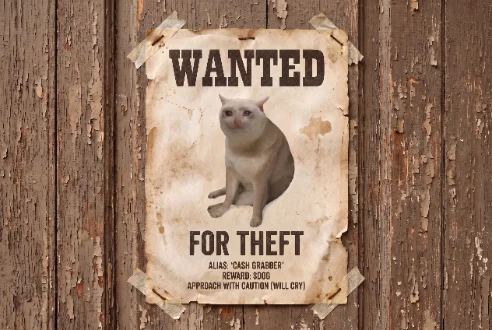
A cat has been reported prowling the district of Robinhood, and the citizens are missing two things: their supper and their savings. Bowls turn up licked clean; wallets turn up lighter; and the cat, curiously, turns up rounder by the day. Witnesses say it does not so much steal as “manage your assets” — a distinction lost on the empty-pawed.
One townsdog left out a single biscuit and a modest sum of coin. By morning both were gone and, in their place, a receipt reading “thank you for your deposit.” The cat now sits upon the pile it has assembled, purring the contented purr of a creature that has read the terms and conditions and knows full well that you have not.
PLACEHOLDER_CONTRACT_ADDRESS
Diamond-Paw Tonic